
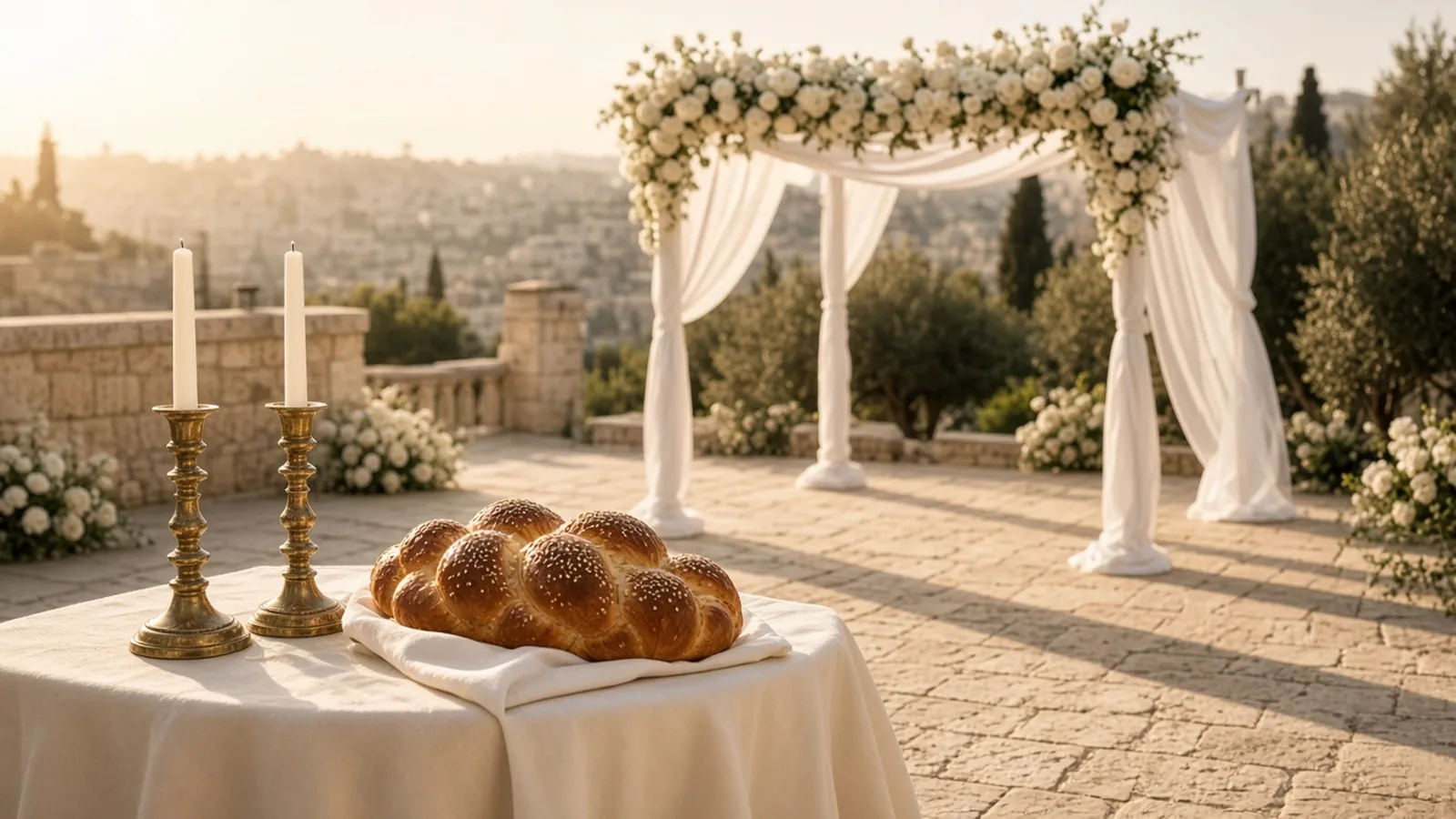
Can You Have a Jewish Wedding on Friday? Halacha and Planning
Can you have a Jewish wedding on Friday? Yes. The Shulchan Aruch records one opinion that weddings should not be held on the eve of Shabbat and another that permits them, and it concludes that “the custom has spread to marry on Erev Shabbat”. The real question is practical: planning the day so the ceremony and the celebration finish well before Shabbat begins, especially when some of your guests keep Shabbat. In this article I explain what the sources say, how to plan a Friday afternoon wedding in Israel, and what your options are.
What Jewish law says about a Friday wedding
The Shulchan Aruch, Even HaEzer 64:3, brings two views. Some say one should not marry on Erev Shabbat, out of concern that preparing the feast could lead to desecrating Shabbat. Others permit it, and the text says this became the accepted custom, provided the preparations for the meal begin a few days earlier. In other words, a Friday wedding is not unusual in Jewish tradition. The main concern is practical: not to find yourselves still cooking, serving or celebrating when Shabbat arrives.
What Jewish law clearly forbids is kiddushin on Shabbat itself. The Mishnah in tractate Beitzah lists betrothal among the acts not performed on Shabbat and festivals, and the Shulchan Aruch, Orach Chaim 339, rules the same way. The Rema there mentions cases where a chuppah ran into Friday night under pressing circumstances, but adds that one should be careful to avoid this in the first place.
Planning a Friday afternoon wedding
The common format in Israel is a Friday midday wedding: a reception, the chuppah and a meal that ends in the afternoon. A few things to think about early:
- Candle lighting time: it changes with the season and the location. In winter Shabbat starts much earlier than in summer, so build the schedule around your exact date.
- Travel time home: Shabbat observant guests need to be home before Shabbat begins. If the venue is far from where they live, leave a bigger margin.
- Chuppah early in the event: when the ceremony comes first, even guests who must leave early see the most important moment.
- Venue and vendors: make sure the venue, photographer and musicians are set up for a daytime event with an early finish.
How late can the chuppah be?
There is no single time that fits every wedding. The principle is simple: those who keep Shabbat will want the ceremony to end well before candle lighting, and the meal to end early enough for everyone to get home and prepare. In practice, couples set the chuppah time according to that week’s Shabbat times and build the rest of the day around it. If honoring your religious guests matters to you, ask them what works for them. If you are still choosing a date, I have also listed the Jewish wedding dates to avoid in 2027.
Does the rabbi officiate on Shabbat?
I officiate on Fridays and on Saturday nights after Shabbat ends, but not on Shabbat itself. This comes from respect for the tradition and for Shabbat. If you want a weekend wedding and a Friday afternoon does not suit you, Saturday night is a good option: the chuppah takes place after Shabbat is over, so Shabbat observant guests can come without any problem. You can read more about the ceremony itself on the wedding ceremony page.
Honoring guests who keep Shabbat
- Print both the chuppah time and the end time on the invitation, so they can plan.
- Start the ceremony on time. A delay on a weekday is an inconvenience; on a Friday it may keep guests from taking part.
- Check the kashrut arrangements at the venue if this matters to some of your guests.
- Be gracious with those who leave early. It is not disrespect, it is keeping Shabbat.
Pros and cons of a Friday wedding
- Pros: a relaxed, family atmosphere, natural daylight for photos, guests who do not need to work the next morning, and the option of a family Shabbat dinner afterwards.
- Cons: limited time, especially in winter. Some guests work on Friday morning, and Shabbat observant guests will leave early. A party late into the night does not fit this kind of day.
If you are unsure, ask yourselves what matters more: dancing until late, or a warm, intimate daytime event.
Frequently Asked Questions
Is a Friday wedding allowed in Jewish law?
Yes. The Shulchan Aruch cites a view that forbids it and one that permits it, and writes that the custom spread to marry on Erev Shabbat. The focus is on making sure the celebration does not lead to desecrating Shabbat.
By what time should a Friday chuppah end?
There is no fixed hour. Set the ceremony time by that week’s candle lighting time, and leave room for the meal and for guests to travel home.
Can the chuppah take place on Shabbat?
According to Jewish law, kiddushin is not performed on Shabbat. I officiate on Fridays and Saturday nights, but not on Shabbat.
Friday afternoon or Saturday night: which is better?
It depends on you. Friday suits a calm daytime event; Saturday night suits couples who want an evening celebration, and it lets Shabbat observant guests attend.
What about guests who need to leave early?
Hold the chuppah at the start of the event and on time, and put the event hours on the invitation. That way everyone is there for the key moment.
In Summary
A Friday wedding is a familiar and accepted option in Jewish tradition, as long as you plan the timing wisely and respect Shabbat and the guests who keep it. For more answers, see the wedding FAQ. If you would like to check a Friday or Saturday night date, I would be glad to schedule an introductory call.
More Articles for Couples