Mixed Observance Couple: A Jewish Wedding That Feels Like Home to Both
A mixed observance couple planning a Jewish wedding, one partner religious and the other secular, brings two worlds to the chuppah, and sometimes two families with different expectations. The first question is usually where to marry: through the Rabbinate, with a Tzohar rabbi, or at a liberal chuppah outside the Rabbinate. There is no single right answer. There is the answer that fits you, and it grows out of an honest conversation between the two of you about what matters to each. In this article I suggest a way to think about the decision, and ideas for a ceremony in which both sides feel at home.
First, talk to each other
Before you speak with parents, rabbis or venues, sit down together and ask a few simple questions. Which parts of the tradition matter to each of you? What bothers each of you? What are you willing to give up, and what not? Many couples discover the gap is smaller than they thought. The religious partner does not always need everything it seemed, and the secular partner does not always object to everything traditional. When the decision comes from you, it is easier to explain it to your families.
Rabbinate, Tzohar or a liberal chuppah
- Marriage through the Rabbinate: an Orthodox ceremony registered by the state. It suits couples where full Orthodox halachic recognition matters to the religious partner, and the secular partner is willing to accept the Rabbinate’s process and rules.
- A Tzohar rabbi: Tzohar rabbis conduct Orthodox weddings within the Rabbinate registration system. Some couples feel comfortable with their style, but it is still an Orthodox framework with the same basic rules.
- A liberal chuppah outside the Rabbinate: a full Jewish ceremony that can be very traditional or more personal, in which both partners have an equal voice. On its own it is not registered by the state, so many couples combine it with a civil marriage.
For a deeper look at the differences, see my article on Reform vs religious weddings. If it matters to the religious partner that the kiddushin follow halacha even outside the Rabbinate, read about a halachic wedding without the Rabbinate.
Honoring the religious partner in the ceremony
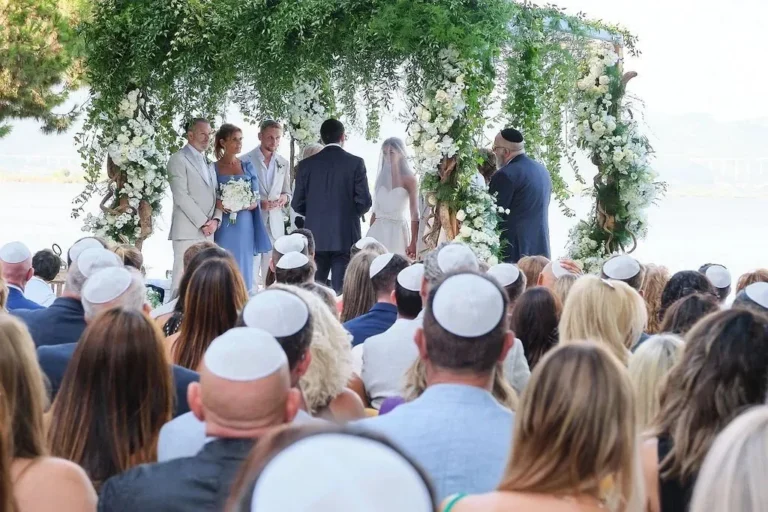
- Keep the traditional structure: the betrothal blessing, kiddushin with a ring, the reading of the ketubah, the seven blessings and the breaking of the glass.
- Choose Shabbat observant witnesses, if this matters to the religious side.
- Say the traditional blessings in their original Hebrew wording.
- Choose a ketubah with traditional wording, or one that honors the tradition and adds a mutual commitment.
- Give religious family members roles of honor, such as reciting a blessing or holding a chuppah pole.
Including the secular partner
The secular partner should also feel the ceremony is theirs, not only that they “gave in”. This is where the personal parts come in:
- Personal words the couple say to each other, in their own language and voice.
- A poem or text the secular partner loves, read between parts of the ceremony.
- A short, simple explanation of each stage, so secular guests feel like participants, not spectators.
- Personal blessings from friends and family alongside the traditional ones.
The result is one ceremony, not two ceremonies glued together. In our preparation meetings we build the structure together and make sure each of you finds yourself in it. Read more about a personal chuppah ceremony and the options.
When the parents disagree
- Decide together first: when your decision is clear, it is easier to listen to your parents without being pulled into an argument.
- Listen for the concern behind the request: sometimes the worry is practical, such as registration or what the community will say. A clear answer to that calms more than any debate.
- Invite the parents to meet the rabbi: a conversation that walks them through the ceremony step by step can turn resistance into curiosity.
- Give the parents a place in the ceremony: when a mother says a blessing or a father holds a chuppah pole, they feel part of it, not guests.
I have also written about how traditional parents relate to a liberal ceremony on the wedding FAQ page.
Kashrut and Shabbat at the event
- Kashrut: choose a venue and caterer with kashrut certification if it matters to the religious partner or the family.
- Timing: a weekday wedding is easiest for everyone. On a Friday, plan to finish in good time before Shabbat. Saturday night is another option. I officiate on Fridays and Saturday nights, but not on Shabbat itself.
- Dancing: some religious families prefer separate dancing or a quiet area. A flexible solution can respect everyone.
Frequently Asked Questions
Can a liberal chuppah be traditional enough for the religious partner?
Yes. You can build a fully traditional ceremony with all the familiar elements. Whether that is enough is a personal question for the religious partner, and worth discussing honestly.
Is a Tzohar rabbi an alternative to the Rabbinate?
Tzohar rabbis work within the Rabbinate registration system. Their style differs, but the framework and its rules are the same.
What if one of us wants a traditional ketubah and the other an egalitarian one?
You can choose wording that combines both wishes, or add a personal declaration alongside the ketubah. This is a good topic for the preparation meetings.
Should we choose a Friday wedding?
If many guests keep Shabbat, a weekday or Saturday night is easier. If you choose Friday, plan an early finish before Shabbat.
Will the ceremony be in Hebrew?
The traditional blessings are in Hebrew. The personal parts can be in Hebrew, English or another language that matters to you.
In Summary
A religious and secular couple can create a wedding in which neither partner feels they gave up who they are. It starts with an honest conversation, continues with choosing the path that suits you, and ends with a ceremony that blends tradition and personality. If you would like to think this through together, I would be glad to schedule an introductory call.
More Articles for Couples