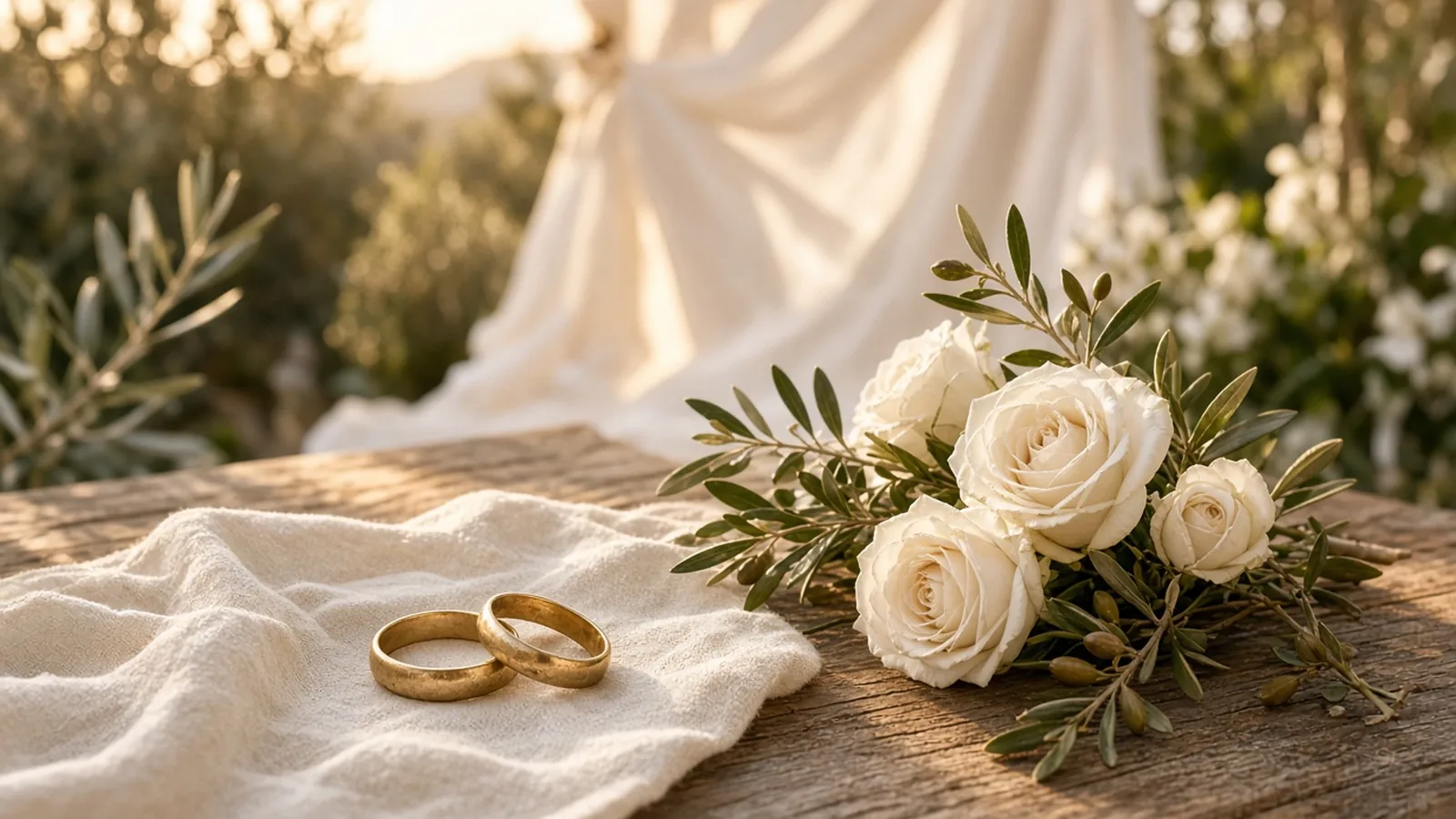
Jewish Vow Renewal Ceremony: How to Plan One
A Jewish vow renewal ceremony is a moment when a married couple stands together again and says out loud: we chose each other then, and we choose each other today. The short answer to “is there such a thing in Judaism?” is that traditional halacha has no required ritual called vow renewal, which gives you a lot of freedom. You can include a chuppah, a cup of wine, blessings, personal vows and even a new decorative ketubah, all in a Jewish spirit and in your own words. Here is how to build one.
Is Vow Renewal a Jewish Tradition?
Kiddushin, the Jewish act of marriage, happens once. A married couple does not need to marry again. But Jewish tradition loves to mark meaningful moments and to give thanks for what we have been given. A vow renewal does exactly that: it does not change your status, it makes room for gratitude, love and a renewed commitment.
Because the ceremony is open, I always begin with one simple question: after everything you have been through together, what do you want to say to each other now?
When Do Couples Renew Their Vows?
There is no set time. Many couples choose a milestone anniversary, such as a silver or golden anniversary. Others choose a very different moment:
- After a hard season they came through together, such as an illness.
- When the original wedding was civil only, and now they want a Jewish ceremony.
- When the children are grown and want to celebrate with them.
- After making aliyah, to celebrate a new chapter in Israel with new friends.
- When the first wedding was very small, and now they want the whole family there.
What Can a Jewish Vow Renewal Include?
A Chuppah
The chuppah stands for the home you have built. Standing under it again after years of life together is deeply moving. You can use a classic chuppah, or a family tallit held up by your children or grandchildren.
A Cup of Wine
Wine is a symbol of joy at Jewish celebrations. You can bless it and share it, as you did at your wedding.
Personal Vows
This is the heart of the ceremony. After years together you have far more to say than on your wedding day: what you have learned, the moments when your partner was there for you, and what you promise for the years ahead.
Blessings
The rabbi can bless you, and family members and friends can each say a short blessing. Some couples also ask the rabbi to say the Priestly Blessing, “May God bless you and keep you”, over them.
Rings
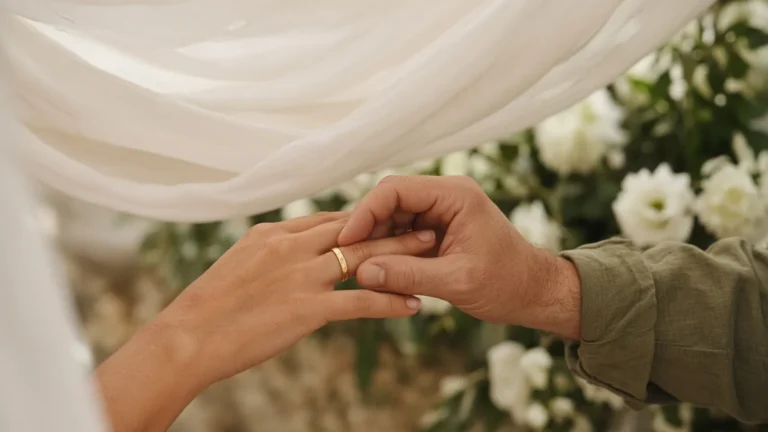
Some couples exchange new rings, while others give each other their original rings again. Both are lovely.
A New Ketubah or Commitment Document
Many couples like to create a new document. It is not a halachic ketubah, but a text that expresses your commitment today, designed to hang in your home. Take a look at custom ketubah design for ideas.
Including Children and Grandchildren
One of the most beautiful parts of a vow renewal is that children, and sometimes grandchildren, can take part. They can hold the chuppah poles, read a blessing they wrote, sing, or simply stand beside you. Little grandchildren can bring the rings.
A Simple Order of Ceremony
- A short opening by the rabbi: why we are here and what this moment means.
- Walking to the chuppah with the family.
- A blessing over wine.
- Personal vows from each partner.
- Exchanging rings.
- Blessings from family and friends.
- A closing blessing from the rabbi.
- Breaking a glass if you like, and mazal tov.
This is only a skeleton. In our preparation meetings, in person or by video, we will shape a ceremony that is truly yours, like every personal Jewish ceremony I lead.
Which Language?
The traditional blessings are in Hebrew. The personal parts, like vows and family blessings, can be in English, Hebrew, Russian, French, Spanish or a mix. I lead ceremonies in English and Hebrew, and can combine both, which works well for families with relatives abroad.
Frequently Asked Questions
Do we need a rabbi for a vow renewal?
Not necessarily. A rabbi can help you build a ceremony with Jewish depth, lead the moment and give it a frame. Many couples find that makes it more meaningful.
Do we say the kiddushin words again?
Usually not, because you are already married. Personal vows and a ring exchange can take the place of that moment.
We only had a civil wedding. Can we do this?
Yes. Couples in this situation often want a full Jewish ceremony with a chuppah, blessings and a ketubah. Mention it in our first conversation so we can plan accordingly.
Can we hold it abroad?
Yes. I lead ceremonies in Israel and abroad, so we can talk about where you would like to celebrate.
In Summary
A Jewish vow renewal ceremony is a chance to say thank you, celebrate what you have built and commit again, surrounded by the people you love most. There are no rigid rules, and there is plenty of room for love and tradition. Writing your own words? See Jewish wedding vows examples. If you are thinking about one, I would love to hear from you. You can schedule an introductory call and we will start planning together.
More Articles for Couples