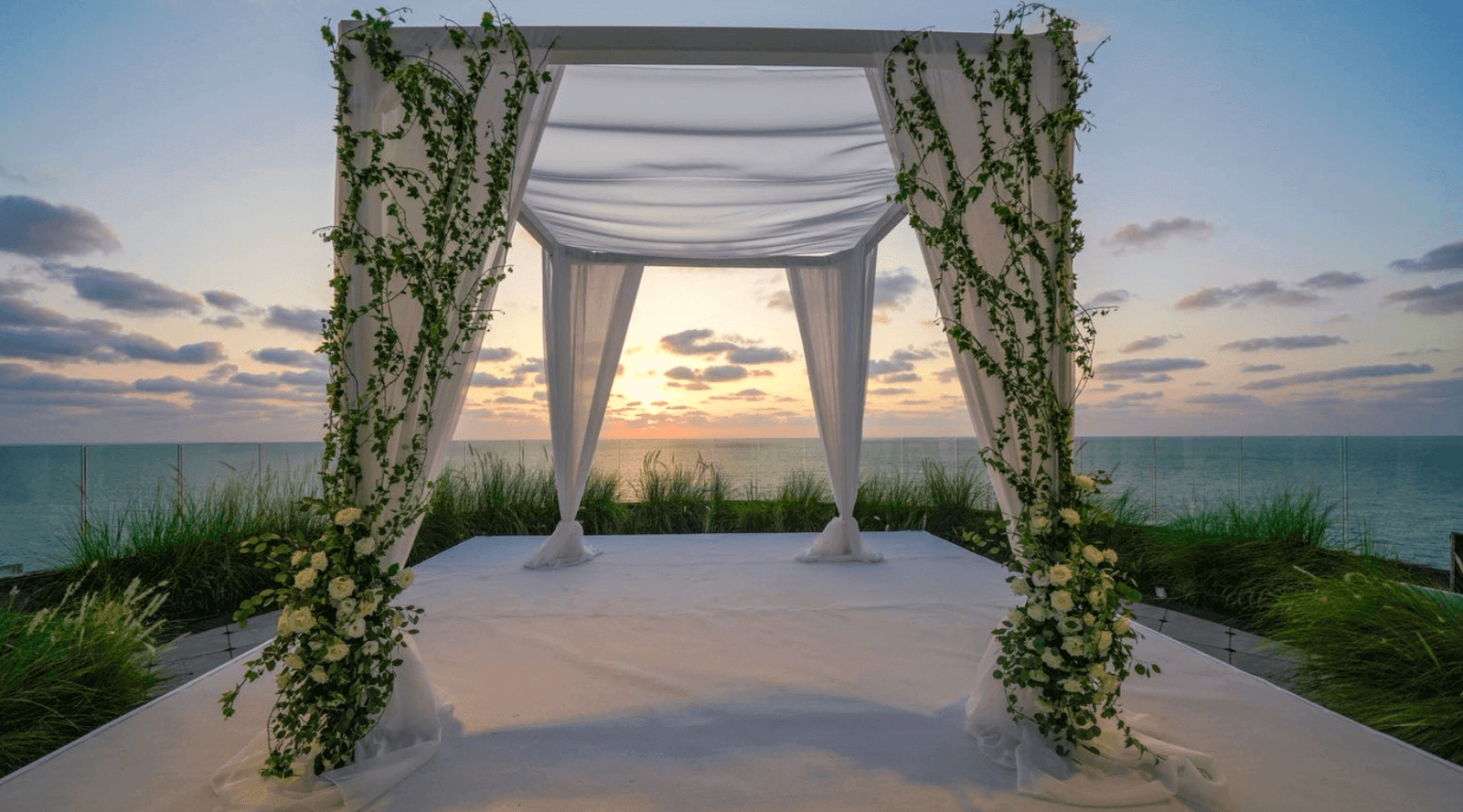
Getting married in Beer Sheva, out in the Negev desert or in Eilat? Rabbi David Mordecai marries couples across Israel, and the south is on his map like any other region. He comes to you, whether to a hall in town, open desert or the beach, and builds a personal, egalitarian Jewish ceremony with you.
When heat is part of the plan
In the Negev and Eilat, summer is long and very hot, and even in autumn and spring the middle of the day is warm. So a chuppah in the south is usually set close to sunset or after it. Desert nights cool quickly, and the gap between afternoon and evening can be large. A few things worth settling with the venue:
- Shade and cold water for guests who arrive before the chuppah
- Sound equipment suited to open ground and wind
- Lighting, if the chuppah is after dark
- Blankets or heaters for a winter wedding in the desert
Eilat has pleasant, sunny winters, which is why many couples choose it precisely in the cooler months. The trip south is long for some guests, Eilat especially, so pick a time that lets people coming from far away arrive relaxed.
Guests from abroad and a bilingual ceremony
The desert and the Red Sea draw couples who have family living outside Israel. The rabbi leads ceremonies in Hebrew and in English and can hold a bilingual one, where each stage is explained to guests who do not understand Hebrew. The traditional blessings are said in their original wording, while explanations and vows can be in English. See how it works in practice in a wedding ceremony in English.

More dates than you might expect
The rabbi officiates on Fridays and on Saturday night after Shabbat ends, though never on Shabbat itself. He also marries couples during the Omer and the Three Weeks, periods when many rabbis do not perform weddings. For a Friday wedding in the desert the chuppah is moved earlier so the ceremony ends before Shabbat begins. More in Friday weddings and weddings during the Omer.
Good to know: the ceremony is not recognized by the Rabbinate or the state. Couples who want registration add a civil marriage.
Frequently Asked Questions about weddings in Beer Sheva, the Negev and Eilat
What time should a summer chuppah in the desert be?
Usually close to sunset or after it, when the heat eases. The exact time is set together with the venue and the rabbi.
Can the ceremony be in English for our guests from abroad?
Yes. The rabbi leads ceremonies in Hebrew, in English or in both together, and your vows can be in any language.
Does the rabbi come all the way to Eilat?
Yes. He officiates throughout Israel, from the north down to Eilat, and arranges the trip in advance.
Our guests from abroad ask whether the marriage will be recognized. What should we tell them?
That the chuppah is a full Jewish ceremony, but it is not recognized by the Rabbinate or the state. Registering the marriage in Israel is done separately, through a civil marriage. The full explanation is in our guide to civil marriage in Israel.
Marrying in the south? Write to the rabbi or call +972 54 5603603 to set up an intro call with no obligation. A full overview of the service is on Reform rabbi for weddings, and the other regions are on all the regions he covers.
Mazal tov, and may you get a perfect desert sunset!