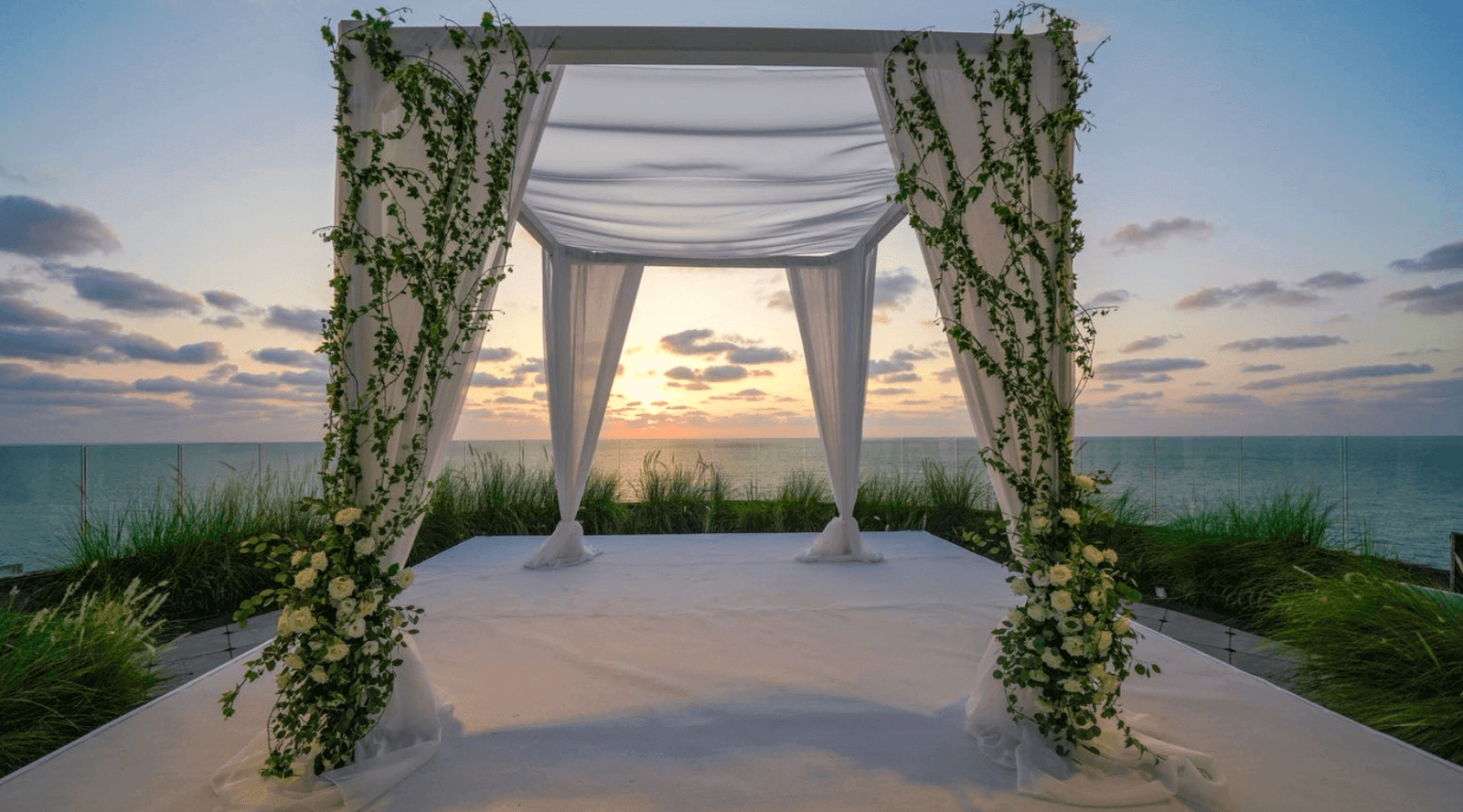
A wedding in the north is usually an outdoor wedding: among the trees of the Galilee, by the water at the Kinneret, or in open country on the Golan Heights. Rabbi David Mordecai, a Reform rabbi, singing rabbi and lawyer, marries couples all over Israel and travels to the far north too. He does not live in the region, so he plans the drive ahead and arrives ready for the ceremony in any weather.
Preparing from a distance, without driving back and forth
Many couples who marry up north live somewhere else, and their families are spread out. That is why the intro call and the preparation meetings can all happen by video. In those meetings you choose the character of the ceremony, traditional, liberal or secular, write the ketubah text together and decide which relatives will be honored under the chuppah. By the wedding day everything is settled, even if you first meet the rabbi in person right there.
What one bride who married up north wrote
“We met Rabbi David Mordecai just 3 weeks before the wedding… He responded very quickly and we had a video call to align expectations. Then he came to us in Tiberias for the ceremony… He even introduced a few new ideas, so it turned out a bit more original than usual ceremonies (for example, a liberal ketubah that I, the bride, signed too, and the groom also being consecrated with a wedding ring). It was lovely! We are very happy!”
Ilona ✽ Mit4Mit · translated from Hebrew
More reviews from couples are on the recommendations page.
Seasons, altitude and water
The north is the rainiest part of Israel, and its winters are colder. On the Golan and in the Upper Galilee, evenings stay cool in spring and autumn as well, so remind guests to bring something warm. The Kinneret lies below sea level, and summer there is hot and humid even after sunset. In spring, when everything is green and blooming, the scenery is at its best; it is also a busy season, so check your date early.
For a chuppah in open country, arrange with the venue a sound system that reaches the back rows, shade or heating depending on the season, and a rain plan. The ceremony itself does not depend on the spot, and it can move under an awning or indoors without losing anything.

A short, joyful ceremony with a view
The rabbi sings the blessings himself, and guests sometimes join in. Outdoors this works especially well at small weddings of family and close friends, where every word carries. Ideas for that kind of day are in small, intimate weddings, and the chuppah step by step is on the ceremony structure page. Before you decide, note that the ceremony is not recognized by the Rabbinate or the state.
Frequently Asked Questions about weddings in the north
Does the rabbi travel to the Golan and the Upper Galilee?
Yes. He officiates everywhere in Israel, and that includes every part of the north. The arrival time is coordinated ahead.
Can all the preparation happen over video calls?
Yes. The intro call and the preparation meetings can be held by video, and you can meet the rabbi for the first time on the wedding day if that suits you.
What if it rains?
Agree on a covered alternative with the venue beforehand. The chuppah moves inside or under an awning, and the ceremony stays the same.
Can we marry up north during the Omer or the Three Weeks?
Yes. The rabbi officiates during the Omer period and during Bein HaMetzarim, the Three Weeks. Couples looking for a spring or summer date in the Galilee, by the Kinneret or in the Golan are welcome to contact him.
Planning a wedding in the Galilee, at the Kinneret or on the Golan? Talk to the rabbi at +972 54 5603603 and tell him about your date and place. General information is on Reform rabbi for weddings, and couples marrying in another region will find it on all the regions he covers.
Mazal tov, and may your evening be clear and mild!