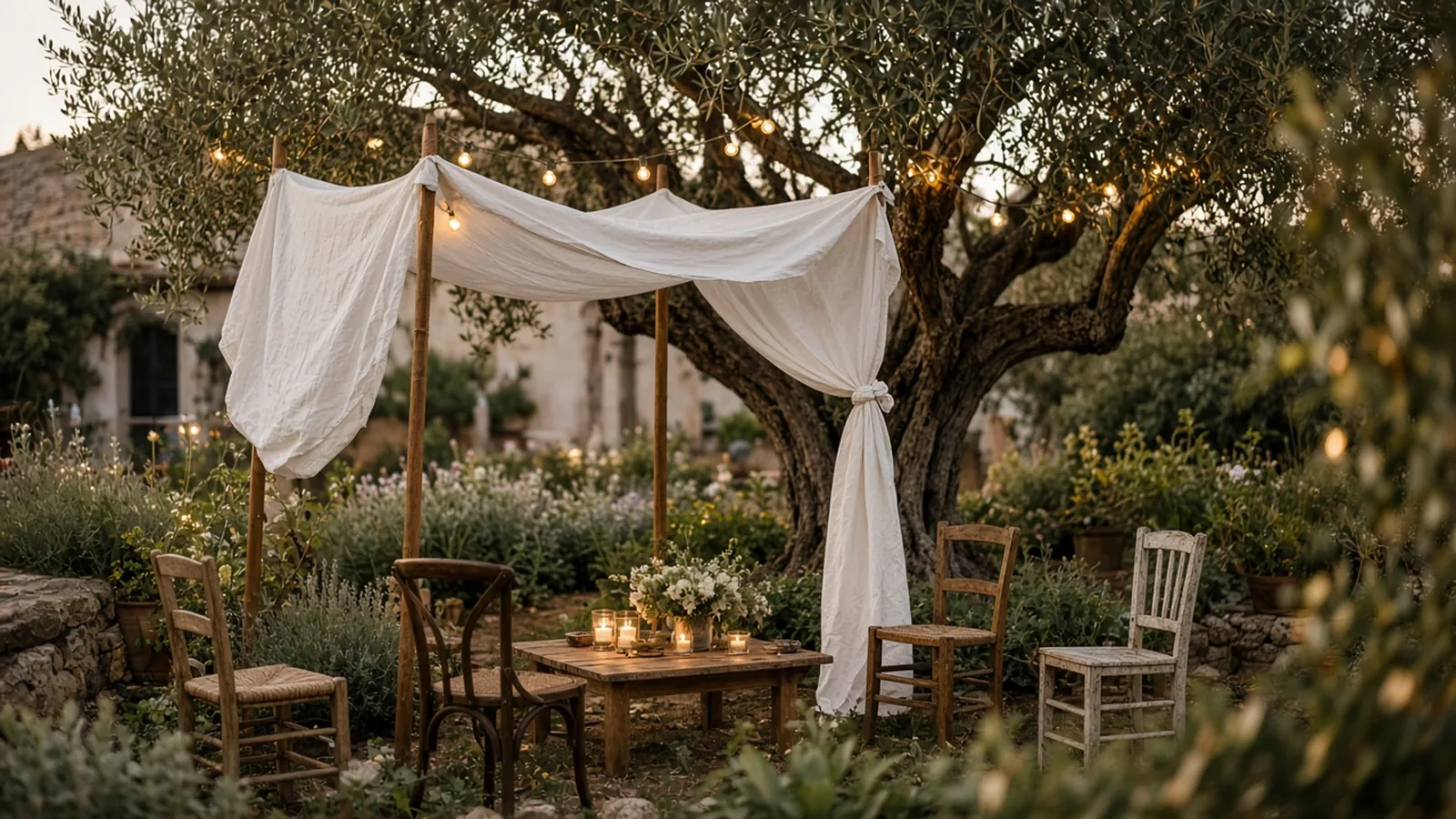
Small Wedding in Israel: Ideas for an Intimate Jewish Ceremony
A small wedding in Israel is not a scaled down version of a “real” wedding. It is a choice. Some couples want to hear every word of the ceremony, see the face of everyone standing around them, and skip the evening of moving from table to table. A chuppah in a back garden, on a balcony, or in a quiet corner of nature has an honored place in Jewish tradition.
As a rabbi, I officiate weddings of every size. I have stood under chuppahs on private terraces, in home gardens and on a cliff overlooking the sea, with just a handful of guests. In this article I want to share what you really need for a small chuppah, how to make it personal, and what to check in advance.
What you need for a small Jewish ceremony
The good news is that the list is short. A Jewish wedding does not need a hall, a stage or a big sound system. It needs a few elements that carry meaning:
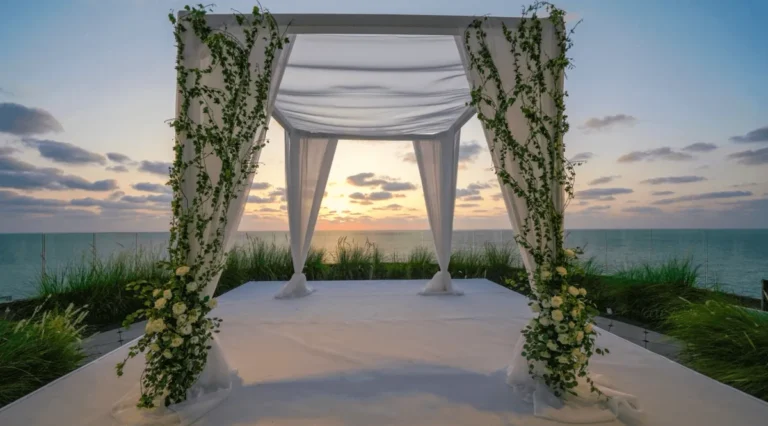
- A chuppah: a simple canopy, a family tallit, or four poles with a fabric you love. For a few minutes, it turns any garden or beach into a home.
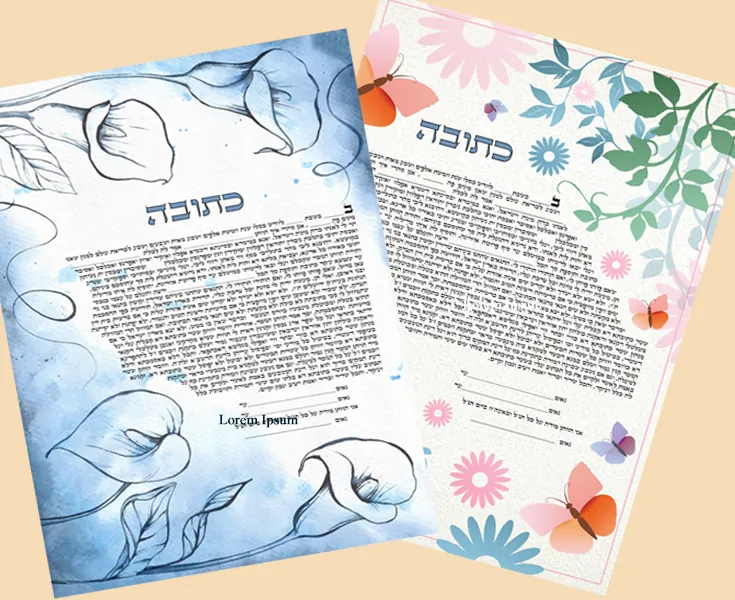
- A ketubah: you choose its text and its design. It is read during the ceremony and stays with you afterwards.
- Rings and a glass to break: two small objects that hold a lot of emotion.
- Wine and a cup: the betrothal blessings and the Sheva Brachot are said over a cup of wine.
- Witnesses: two people traditionally sign the ketubah. Close friends or family members are a lovely choice.
- The people you love: even if there are only a few, they are part of the ceremony, not just an audience.
A garden or home wedding: a short checklist
- Where exactly will the chuppah stand? Look for a beautiful backdrop, shade during the day, and enough space for everyone to stand close.
- Lighting: for an evening ceremony, think about warm light around the chuppah.
- Sound: with few guests you rarely need a microphone, but near a road or the sea it is worth checking.
- Plan B: a simple alternative for rain or heat, such as a covered balcony or a large room, saves a lot of stress.
- Neighbors: a friendly word in advance makes all the difference.
- A small table: for signing the ketubah and for the cups.
A chuppah in nature
A ceremony by a spring, in a grove or on a beach can be deeply moving. The sky is the ceiling, and the quiet does half the work. A few practical points:
- Check the place and its rules. For a public area, a national park or a regulated beach, ask the responsible body in advance what is allowed and what needs coordination.
- Time of day matters. The light in the hour before sunset is gentle for the eyes and for photos.
- Accessibility: if grandparents are coming, think about an easy path and a few chairs.
- Wind: hold the chuppah cloth and the ketubah firmly, or secure them well.
Ideas for a truly personal small ceremony
At a large wedding, many moments pass quickly. At a small one, you can slow down. Ideas that work especially well with a few guests:
- A circle instead of rows: guests stand around the chuppah, so everyone sees and everyone is present.
- Sheva Brachot from loved ones: each blessing is said by a different person, who can add a personal sentence.
- A wish from everyone: with a small group, each guest can offer you a short wish.
- Your families’ languages: I lead the ceremony in Hebrew and English, and the traditional blessings are said in Hebrew. Your own vows, and words from family or guests, can be in any language your family speaks.
- A quiet moment: a few minutes alone after the ceremony, before you return to everyone.
To make the ceremony feel like yours, I meet each couple for several preparation meetings, in person or by video. Together we build the structure, the texts and the special moments. You can read more about how I build a personal wedding ceremony for each couple.
Can we have a chuppah without a party?
Yes. Some couples want only the ceremony, with nothing around it. That is a completely legitimate choice. A twenty minute chuppah with a few close people, followed by a family meal at home, can become the day you remember most.
Please keep in mind that a chuppah I officiate is a Reform Jewish ceremony and is not registered by the Rabbinate or the Interior Ministry. Couples who also want a registered civil status combine the chuppah with a civil marriage, which I explain on the page about civil marriage options for Israelis.
Why choose a small wedding?
In my experience, at small weddings couples connect to every moment. They see their parents’ faces, hear their friends laugh, and remember the whole ceremony. My approach adapts to any size, and at a small wedding I have the privilege of getting to know almost everyone present.
If you are still deciding, you may find helpful answers on the frequently asked questions about intimate weddings and the ceremony page.
Let’s talk
If you are picturing a chuppah in a garden, on a balcony or in nature, I would love to hear what you have in mind and check the date together. You are welcome to get in touch to schedule an introductory call.
More Articles for Couples