Secular Wedding Ceremony Script: Sample Text and Structure
Looking for a secular wedding ceremony script, a starting point for writing your own? You have come to the right place. A secular wedding is a ceremony in which the couple chooses the words, the symbols and the structure, without a binding religious framework. The short answer: a good secular ceremony is usually built from an opening, the couple’s story, personal vows, an exchange of rings and a festive ending. In this article you will find the common structure, ideas for texts, and an original sample script you can adapt. The example is general on purpose; its goal is to help you write a text of your own, whether you are Israeli born, new to Israel or marrying a partner from abroad.
What Is a Secular Wedding Ceremony?
A secular wedding ceremony is a marriage ceremony that is not based on halacha or on religious blessings. Some couples choose it because it reflects their worldview. Others include elements of Jewish tradition, such as a chuppah or breaking a glass, as cultural symbols rather than as a commandment. The ceremony can be led by a celebrant, a close friend, a family member, or a rabbi who also leads secular ceremonies.
Good to know: a secular ceremony in Israel, like any ceremony held outside the Rabbinate, is not registered on its own as a marriage at the Ministry of Interior. Many couples combine it with a civil marriage abroad or with recognition as common-law spouses. The information here is general and is not legal advice.
The Structure of a Secular Wedding Ceremony
There is no single required structure, but most secular ceremonies are built from similar stages:
- Entrance: the couple walks in, separately or together, to music they have chosen.
- Opening: the celebrant welcomes the guests and introduces the moment.
- The couple’s story: a few words about how you met, your path together and what connects you.
- Readings or songs: a poem, a literary passage or a blessing read by family or friends.
- Personal vows: each partner states their commitment in their own words.
- Exchange of rings: with a short sentence said while placing the ring.
- Covenant or signing: some couples sign a partnership covenant in front of the guests.
- Ending: breaking a glass, a kiss, applause and music.
How to Write a Secular Ceremony Script
Start From Your Values
Before you write a word, ask yourselves: what matters to us in this relationship? Honesty, humor, freedom, family, partnership? These values will be the thread running through the ceremony.
Keep It Short and Simple
A good script is usually the one that sounds like you. There is no need for lofty language. One true sentence is worth more than a flowery paragraph.
Involve Your Guests
You can invite the guests to take part, for example by answering “we will” when asked whether they will support the couple, or by reading one line together.
Choose Your Symbols
A chuppah, rings, breaking a glass, a candle, earth or water: symbols can turn an abstract idea into a moment people remember.
Think About Two Languages
If some of your guests do not speak Hebrew, or one of you grew up abroad, you can write the vows in your native language and add a short translation or summary for the other guests.
A Sample Secular Wedding Ceremony Script
Please note: this is a general example only, for inspiration. Adapt it to your story, your language and your values.
Opening (celebrant): Dear family and friends, welcome. We have gathered here to celebrate with [name] and [name], and to witness the moment they choose each other, in front of the people they love.
About the couple (celebrant): Every relationship begins with one small moment and continues through thousands of small choices. [Name] and [name] have chosen to build a home with room for laughter, for quiet, for dreams and for disagreements. Today they say that choice out loud.
Vow (partner A): [Name], I choose you today and every day. I promise to listen even when it is hard, to celebrate your successes as if they were my own, and to always remember that we are on the same side.
Vow (partner B): [Name], I choose you as you are, and who we will become together. I promise to protect our friendship, our curiosity and our patience, and to build an open home with you.
Rings: With this ring I give you my love and my faithfulness, today and all our days.
Ending (celebrant): In front of everyone here, [name] and [name] have spoken the words they chose. With great joy, I invite you all to bless them.
Ideas for Including Tradition in a Secular Ceremony
Some secular couples feel a deep connection to Jewish culture, even without a religious commitment. You can include:
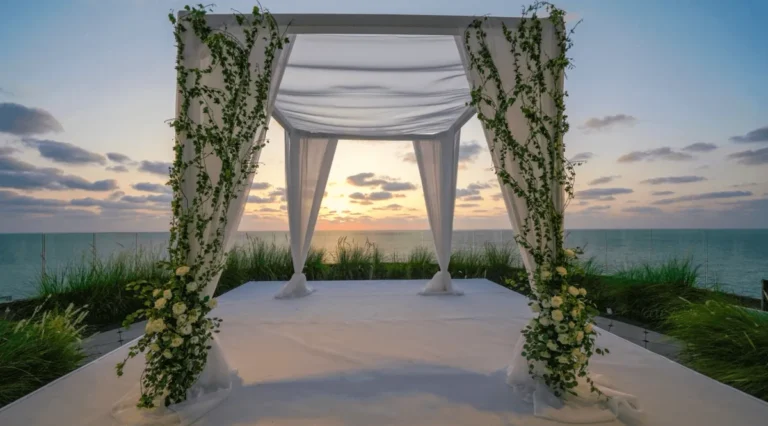
- A chuppah, as a symbol of your shared home.
- Blessings in free wording instead of the traditional Seven Blessings.
- A passage from the Song of Songs or from Hebrew poetry.
- Breaking a glass, as a moment of memory and of joy.
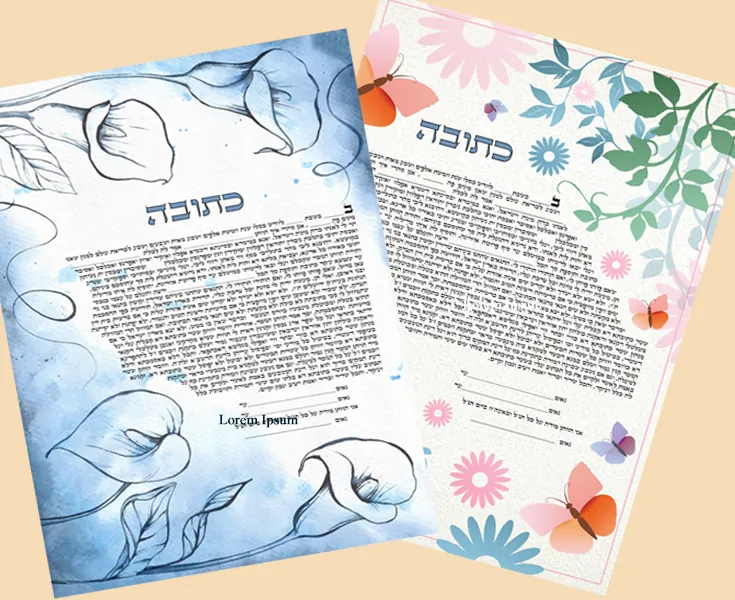
- A ketubah with a secular or egalitarian text.
Rabbi David Mordecai also leads secular ceremonies, alongside traditional and Reform ones. You can read more about a secular wedding ceremony alongside traditional and liberal ceremonies.
A Partnership Covenant: A Personal Document for the Ceremony
Many couples at a secular wedding choose to sign a partnership covenant, a short document that expresses their commitments to each other. It can be written in simple language, include the values you have chosen, and be signed in front of the guests by the couple and two witnesses of your choice. Some couples later hang it on a wall at home, like a ketubah. Keep in mind that the covenant is a document of values and feelings. If you want to settle rights and property in a binding way, draw up a prenuptial or cohabitation agreement with a lawyer.
If you are looking for inspiration for texts and blessings, you can browse the downloads for couples getting married, including a ceremony order and blessing texts.
Common Mistakes When Writing a Secular Ceremony
- A ceremony that runs too long: guests’ attention is limited. A focused ceremony works better.
- Too many inside jokes: the ceremony should also speak to guests who do not know every detail.
- Writing at the last minute: a good script needs time, a few drafts and reading aloud.
- Forgetting the legal side: a secular ceremony on its own is not a marriage registration, so plan that part too.
Frequently Asked Questions
Who can lead a secular wedding ceremony?
Anyone the couple chooses: a professional celebrant, a friend, a family member or a rabbi who also leads secular ceremonies. What matters is that the person knows the couple and feels comfortable in front of an audience.
Is a secular wedding recognized in Israel?
A secular ceremony in Israel is not registered on its own as a marriage. Couples who want married status need to look at an additional arrangement, such as a civil marriage abroad. This is general information and not legal advice.
Is there a chuppah at a secular ceremony?
There can be, but it is not required. Many couples choose a chuppah as a symbol of home, while others prefer a floral arch or an open stage.
How long does a secular ceremony last?
Most ceremonies are relatively short. Plan a ceremony that lets every moment breathe, without the guests losing focus.
Can we include a religious blessing in a secular ceremony?
Yes. If it matters to you, you can include one blessing or a traditional passage and explain its meaning to the guests.
In Summary
A secular wedding ceremony gives you the freedom to tell your story in your own words. Start from your values, build a simple structure, and use the sample script only as a starting point. If you would like help building the ceremony, you can fill in a short order form.
More Articles for Couples