
Jewish Wedding Ceremony Order: A Step by Step Guide
What is the Jewish wedding ceremony order? The short answer: the chuppah ceremony is made of two parts that were once held separately, betrothal (erusin) and marriage (nisuin), with the reading of the ketubah between them. The usual order is: the reception, walking to the chuppah, the betrothal blessings over a cup of wine, kiddushin with a ring, the reading of the ketubah, the Seven Blessings, and the breaking of the glass. In this guide you will find a simple explanation of each step, what it means, and how a traditional ceremony differs from a Reform one, so that you arrive at the chuppah understanding every moment. If some of your guests are new to Jewish weddings, this guide can also help you explain the ceremony to them.
Two Parts in One Ceremony
In ancient times, betrothal and marriage were held on two separate occasions, sometimes months apart. Over the years the two parts were joined into one ceremony, but the structure remained: the first part is the betrothal, also called kiddushin, and the second part is the marriage, which ends with the Seven Blessings. The reading of the ketubah separates them.
Before the Chuppah
The Reception
Before the ceremony, the couple usually greets the guests, sometimes separately and sometimes together. This is the time for hugs, photos and excitement.
Signing the Ketubah
In many cases the ketubah is signed before the chuppah, in the presence of the witnesses and the rabbi. That way, during the ceremony, the ketubah is ready to be read.
The Veiling, or Bedeken
In Ashkenazi tradition, the groom covers the bride’s face with a veil before the chuppah. In a Reform ceremony you can keep the custom, skip it, or turn it into a mutual moment of a first look.
The Steps of the Ceremony Under the Chuppah
Walking to the Chuppah
The couple enters the chuppah, usually accompanied by parents or family members. The chuppah itself symbolizes the home the couple is building, open on all sides like the tent of Abraham. In some traditions the bride circles the groom; in a Reform ceremony both partners sometimes circle each other.
The Betrothal Blessings
The rabbi recites the blessing over the wine and the betrothal blessing over a cup of wine, and the couple tastes the wine. This is the moment the first part of the ceremony begins.
Kiddushin With a Ring
This is the heart of the ceremony. Traditionally, the groom places a ring on the bride’s finger and says, in Hebrew, “Behold, you are consecrated to me with this ring according to the law of Moses and Israel”, before two witnesses. In a Reform ceremony kiddushin is mutual: both partners give a ring and say a betrothal phrase, in the traditional wording or in an egalitarian wording they have chosen.
Reading the Ketubah
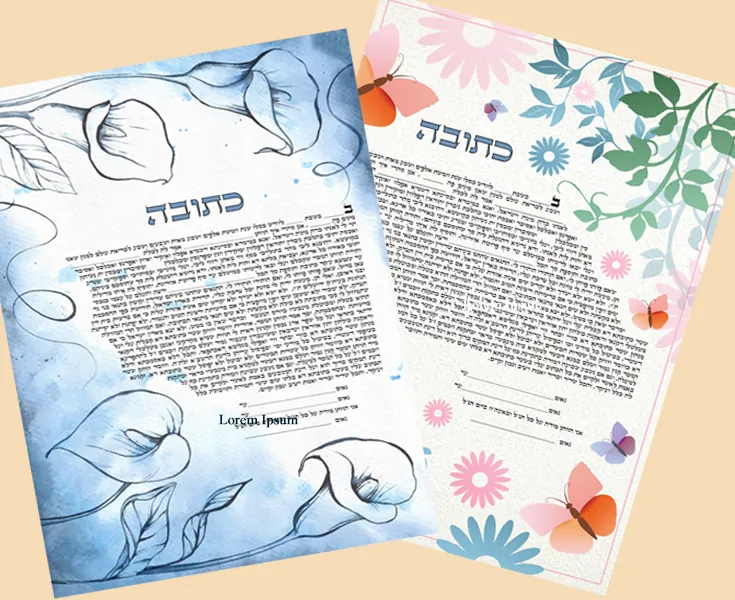
The rabbi, or an honored guest, reads the ketubah aloud. A traditional ketubah is written in Aramaic; an egalitarian ketubah can be written in Hebrew and another language and express a mutual commitment.
The Seven Blessings
Over a second cup of wine, seven blessings are recited: over the wine, over the creation of the world and of humanity, over the joy of the couple and over Jerusalem. You can invite family members and friends to recite the blessings, in Hebrew or in translation.
Breaking the Glass
At the end of the ceremony a glass is broken, in memory of the destruction of Jerusalem and at the same time as a moment of release and joy. In a Reform ceremony both partners can break a glass. And then, of course, “Mazal tov!”
Yichud
After the chuppah the couple usually spends a few minutes alone. It is a chance to breathe, eat something and be together before going back to the guests.
Different Customs in Different Communities
The order of the ceremony is similar in all communities, but customs differ. In Ashkenazi communities the chuppah is often held under the open sky, and this tradition also includes the veiling before the chuppah and the circling of the groom. In Sephardi and Mizrahi communities a tallit is sometimes spread over the couple’s heads, and sometimes the Shehecheyanu blessing is said over a new tallit. Some families sing special songs as the couple walks to the chuppah, and some throw sweets or rice after the ceremony. If there is a family custom that matters to you, tell the rabbi in advance, and it can be included in the ceremony.
How to Prepare for the Ceremony
For the ceremony to go smoothly and calmly, it helps to settle a few things in advance:
- Choose the witnesses and make sure they know when to arrive.
- Decide who will walk you to the chuppah and who will stand under it.
- Choose who will read the ketubah and who will recite blessings.
- Prepare the rings, the cup of wine and the glass to break.
- Coordinate the key moments of the ceremony with the photographer and the musicians.
- Write your personal vows, if you chose them, and read them aloud beforehand.
The better organized the preparation, the more you will simply be able to be present on the day itself.
What Changes in the Order of a Reform Ceremony?
A Reform chuppah keeps all the traditional elements, but lets the couple take an active and equal part in them. The main differences:
- Mutual kiddushin, with a ring for each partner.
- An egalitarian ketubah, in Hebrew or another language.
- Women and men can serve as witnesses and recite blessings.
- Room for personal vows, songs and readings.
- The option of two languages, with an explanation of each step for the guests.
Who Should Stand Under the Chuppah?
Under the chuppah stand the couple and the rabbi, and usually also the parents or close family members. There are also two witnesses, who sign the ketubah and are present for the kiddushin. In an Orthodox ceremony the witnesses are observant men who are not relatives; in a Reform ceremony women can also be witnesses. Choose the witnesses in advance and explain their role to them.
How Long Do the Chuppah and Kiddushin Last?
A typical Reform chuppah ceremony is relatively short, and couples who include many personal elements create a longer one. Plan the ceremony so that it keeps the guests’ attention. You will find more detail in the answers to common questions about a Reform wedding.
Keep in mind: a chuppah ceremony held outside the Rabbinate is not registered on its own as a marriage in Israel. The information here is general and is not legal advice.
Frequently Asked Questions
Which comes first: kiddushin or the ketubah?
The usual order is the betrothal blessings, kiddushin with a ring, and then the reading of the ketubah, which separates the betrothal part from the marriage part.
Can the Seven Blessings be shared among several people?
The rabbi can recite all of them, and you can also invite family members and friends to recite one blessing each. In a Reform ceremony women can also recite blessings.
Do we have to break a glass?
Breaking the glass is a very common custom, but it is not part of the kiddushin itself. Most couples keep it, and some break two glasses.
What is said while placing the ring?
The traditional Hebrew wording is “Harei at mekudeshet li”, “Behold, you are consecrated to me with this ring according to the law of Moses and Israel”. In a Reform ceremony there are parallel wordings for both partners, and you can add a personal sentence.
Can we change the order of the ceremony?
A Reform ceremony is very flexible. You can add vows, songs and readings, and adapt the order to the couple, while keeping the central elements.
Who holds the chuppah poles?
The chuppah can stand on fixed poles, or you can ask four friends or family members to hold it. It is a lovely way to give a role of honor to people close to you.
In Summary
The order of a Jewish wedding ceremony moves from betrothal, through the ketubah, to the Seven Blessings and the breaking of the glass. When you understand the meaning of each step, the ceremony becomes not a collection of customs but one whole story. If you would like to build a ceremony that suits you, you can fill in the order form.
More Articles for Couples