Tallit at a Wedding: Customs, Meaning and Ideas
A tallit at a wedding is a beautiful custom found at many Jewish weddings, in different forms. The short answer: in some communities a tallit is spread over the couple during the blessings, in some families the groom wears a tallit for the first time on his wedding day, and some couples turn a family tallit into the chuppah canopy itself. There is no halachic requirement for a tallit at the chuppah. It is a custom. Here are the main customs, the Ashkenazi and Sephardi differences, and personal ways to include one.
Where Does the Custom Come From?
The tallit is connected to the commandment of tzitzit. The Torah says: “You shall make yourself twisted fringes on the four corners of your garment” (Deuteronomy 22:12). The very next verse begins: “If a man takes a wife” (Deuteronomy 22:13). Some explain the link between the tallit and the wedding by this closeness of the verses. Beyond the source, the tallit carries symbolic meaning: it wraps, protects and unites, like the home a couple builds.
Ashkenazi and Sephardi Customs
Ashkenazi Custom
In many Ashkenazi communities, men begin wearing a tallit for prayer only after they marry. So the first tallit is often a gift to the groom before the wedding, and in some families the groom first wraps himself in it on the wedding day or afterward.
Sephardi and Mizrahi Custom
In many Sephardi and Mizrahi communities, boys wear a tallit from a young age. At the chuppah, some communities spread a tallit over the heads of the bride and groom, usually during the blessings. It is a moving moment, with the couple standing together under one canopy of fringes.
Is a Blessing Said Over the Tallit?
That depends on family custom and the situation: whether the tallit is new, whether the groom is wearing it, and when. There is no single answer for everyone. If the blessing matters to you, ask your rabbi and decide in advance, so that it is a calm moment rather than a question under the chuppah.
A Tallit as the Chuppah Canopy
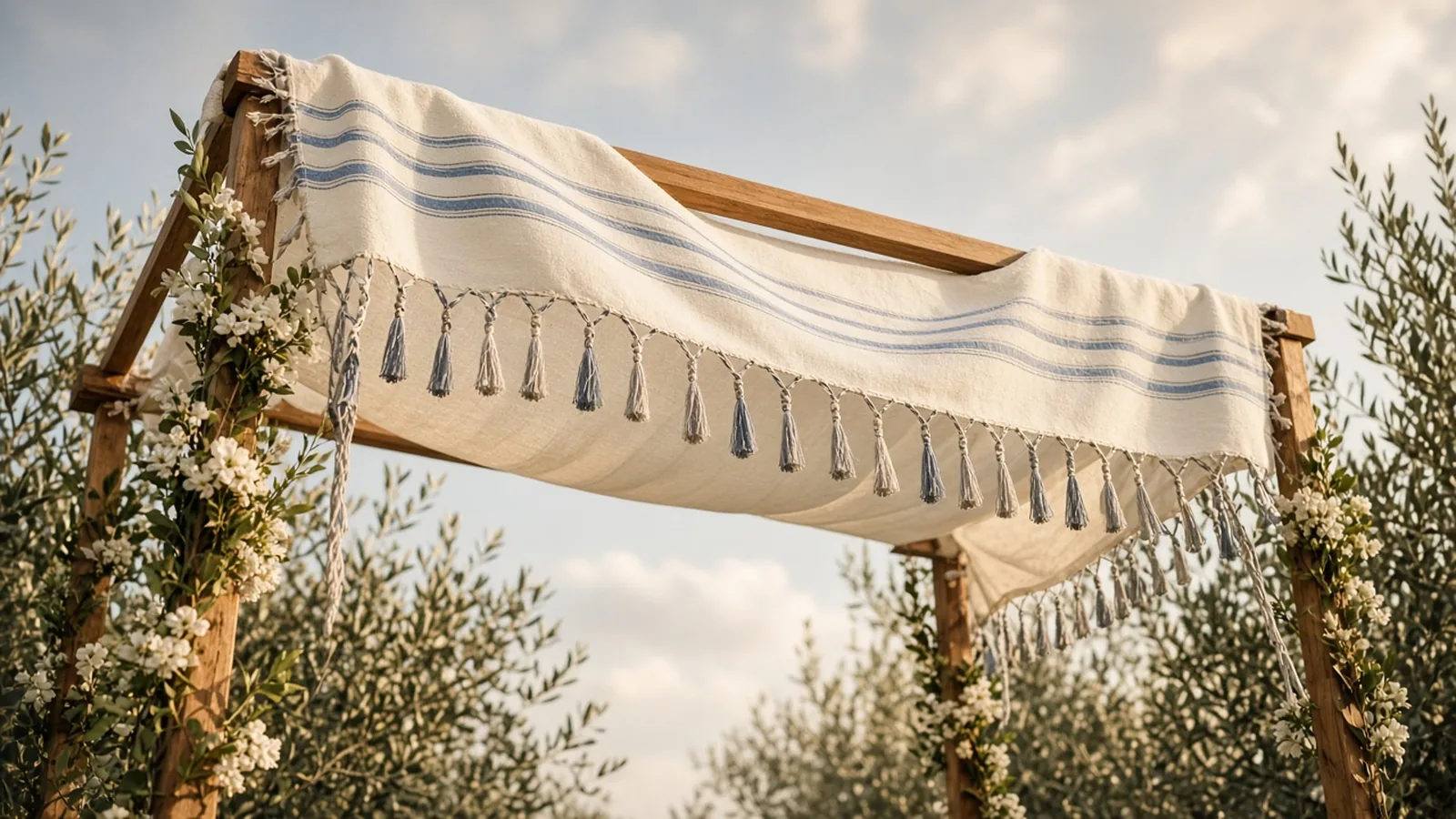
Many couples use a large tallit as the chuppah itself. Four close people hold the four poles, and the tallit is spread over the couple. It is simple, beautiful and meaningful, and it suits a chuppah in nature, in a garden or abroad. If you are planning a Jewish wedding abroad, a tallit is also a chuppah that fits in a suitcase.
Grandfather’s Tallit: A Personal Touch
There is something special about standing under the tallit your grandfather prayed in, or the one your father wore at his own wedding. It connects the generations and gives a place to those who are no longer with us. If the tallit is old and delicate, think about how to attach it to the poles without damaging it, for example with fabric loops or soft clips.
Can the Bride Wear a Tallit Too?
At a Reform ceremony, where both partners are equal, the bride can also wear a tallit if it feels right to her. Some brides receive a tallit as a gift, and some couples stand together under one tallit. At a wedding of two brides or two grooms, the tallit can wrap both partners in the same way. This is part of the flexibility of a Reform Jewish wedding ceremony.
When in the Ceremony?
The tallit can come in at several moments: when entering the chuppah, during the Seven Blessings, or during a blessing the rabbi says over the couple. I describe every stage in the guide to the Jewish wedding ceremony order.
Practical Tips
- Choose a tallit large enough if it will serve as the canopy.
- Check in advance how it attaches to the poles.
- For an outdoor chuppah, think about wind. A light tallit can blow away.
- If you have several family tallitot, you can use more than one.
Frequently Asked Questions
Is a tallit required at a Jewish wedding?
No. It is a custom, not a requirement. You can include one or leave it out.
Who spreads the tallit?
It depends on the custom. In some communities the rabbi or the groom’s father does it, and some couples ask someone close to them. We will decide together in our preparation meeting.
Can we use a colorful tallit?
Yes. Tallitot today come in many colors and designs. Choose the one that moves you.
In Summary
A tallit at a wedding is a flexible custom with many forms and meanings. It can wrap the couple, become the chuppah canopy, or connect you with the generations before you. If you would like to include a tallit in your ceremony in a way that suits you, you are welcome to schedule a call with the rabbi.
More Articles for Couples